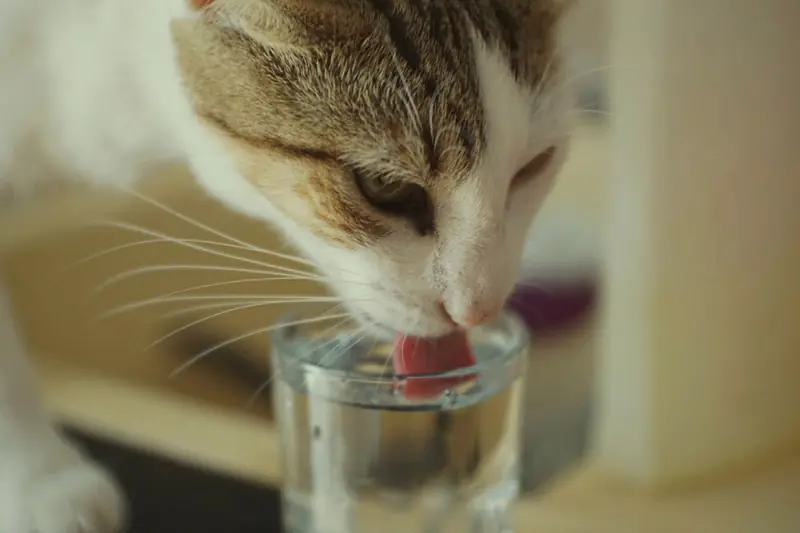
How Much Water Should a Cat Drink? (Vet-Backed Numbers)
The Cornell daily water number, signs of dehydration and ways to help a cat drink.
Quick answer
Cats need about 4 ounces of water per 5 pounds of lean body weight per day, which is about one cup for an average 10-lb cat (Cornell Feline Health Center). Cats that eat wet food get part of that water from the food and may drink less. If your cat is lethargic, weak, off its food or has dry mucous membranes, call your vet.
Jump to section
The daily number: about 4 oz per 5 lb
The Cornell Feline Health Center says cats need about 4 ounces of water per 5 pounds of lean body weight per day. For an average 10-lb cat, that is about one cup (Cornell).
The word "lean" matters. Cornell ties the number to lean body weight, not simply to the number on the scale. Your vet can tell you what your cat's healthy weight is, and the same visit is a good time to ask whether your cat's drinking looks normal for its age and diet.
Here is how to use the rule:
- Find your cat's lean body weight in pounds, with your vet's help.
- Divide that weight by 5.
- Multiply the result by 4 ounces.
- Compare the answer with what your cat takes in from its bowl and its food.
That is Cornell's ratio written as steps. For a 10-lb cat it gives the same answer Cornell does: about one cup. It is a guide, not a prescription, and your vet can adjust it for your cat. Most owners do not measure every sip. A useful habit is to fill the bowl with a measured amount in the morning and see how much is left in the evening, remembering that wet food adds to what your cat takes in, as the next section explains.
Wet food vs dry food
How you feed changes how much your cat needs to drink. Cornell says wet food can be up to 80% water, so a cat that eats it may drink less from the bowl. A cat that eats dry food gets more of its water by drinking (Cornell).
That is why the same daily number can look different from home to home. A wet-fed cat may seem to ignore its water bowl, while a dry-fed cat of the same weight should be visiting it often. Neither pattern is a problem on its own. What matters is that your cat has fresh water available and takes in enough in total.
If you want to change your cat's diet, ask your vet first. Our guide to timed and automatic feeders covers the equipment side of mealtimes, and the water question stays the same whichever food you pick.
Signs of dehydration
Cornell lists these signs of dehydration: lethargy, weakness, poor appetite and dry mucous membranes. In severe cases, a cat's eyes may look sunken. Older cats may show reduced skin turgor even when they are well hydrated (Cornell).
That last point is a warning not to rely on the skin-pinch test at home. Even a well-hydrated older cat can fail it. Look at the whole cat: energy, appetite and gums.
Conditions linked to dehydration
Some health problems make a cat lose more water. Cornell lists chronic kidney disease, diabetes, vomiting, diarrhea and hyperthyroidism, and also diuretics given for heart disease (Cornell).
If your cat has any of these, or you notice a big change in how much it drinks, tell your vet. A change in drinking can be one of the first things an owner sees, so a quick note of what you notice helps. Write down the date, what your cat is drinking and any other changes in appetite or energy, and bring that note to the visit.
Ways to help a cat drink more
Cornell lists these ways to increase water intake (Cornell):
- Put fresh water in easy-to-reach places.
- Prevent conflicts between pets at the bowl.
- Try a fountain, which may help some cats; preferences vary.
- Feed wet food or add water to the food.
- Flavor the water with a little tuna water or low-sodium broth.
Start with the easiest: more bowls in more places, filled fresh. Change one thing at a time, so you can tell what helped, and give each change a few days before you judge it. If your cat's drinking does not improve, or you are worried, ask your vet rather than adding more tricks. In a home with more than one pet, make sure no animal blocks access to the water. Several stations in different spots give every cat a choice.
If you want to try a fountain, read cat water fountain vs bowl for the trade-offs, and our picks for the best cat water fountains for what to compare. Cornell notes that fountains may help some cats, so treat it as a test: watch whether your cat drinks more, and go back to a bowl if it does not.
Keep water away from the litter box. The AAFP/ISFM guidelines say toileting areas should be located away from food and water dishes (AAFP/ISFM).
Water intake and urinary health
Water intake and the bladder are linked. Cornell lists low water intake as a risk factor for lower urinary tract disease (LUTD), along with being middle-aged, being overweight with little exercise, using an indoor litter box and stress (Cornell).
LUTD is common. Cornell says surveys suggest it is the top reason cats visit veterinary practices, and that feline idiopathic cystitis is the most common diagnosis in cats with urinary signs (Cornell).
Water is only one factor on that list. The rest, such as stress, weight and indoor litter box use, are things you can look at too, with your vet's help. Our litter box setup guide covers the box side, and the water advice above covers the bowl side. Cornell calls urethral obstruction "an absolute emergency" (Cornell). If you think your cat may have a urinary blockage, call your vet right away.
Gear that helps
-
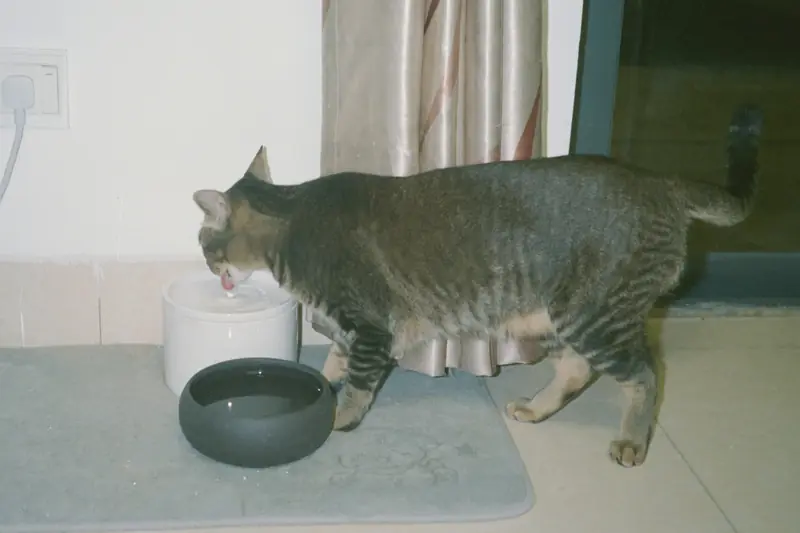
Best Cat Water Fountains
Compare capacity, material, filters and noise if you want to try running water.
-
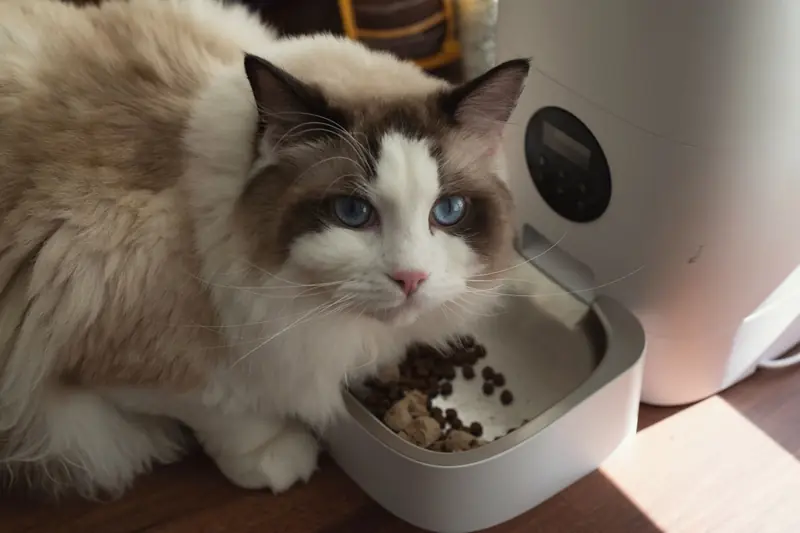
Best Automatic Cat Feeders
A timed feeder helps with meal routines; keep water in a separate spot from the food.
FAQ
How much water should a 10-pound cat drink?
About one cup per day, according to Cornell, which gives the rule as 4 ounces per 5 pounds of lean body weight (Cornell Feline Health Center).
Do cats on wet food need less water?
They may drink less, since wet food can be up to 80% water (Cornell Feline Health Center). Keep fresh water out anyway.
Do water fountains help?
They may help some cats; Cornell notes that preferences vary (Cornell Feline Health Center).
Related
-
-
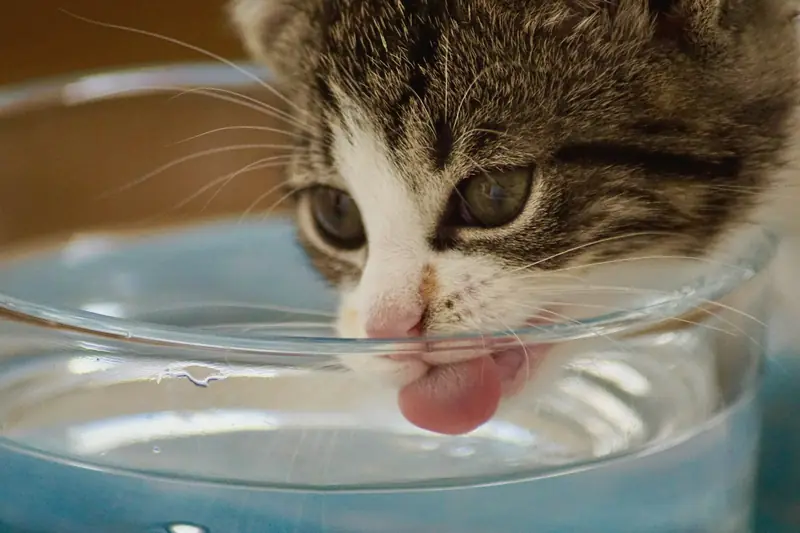
Comparison
Cat Water Fountain vs Bowl: Which Helps Cats Drink More?
Moving water or a still bowl, and what Cornell says about each.
-
-
Guide
Litter Box Setup: How Many, Where, and How Often to Clean
Box count, placement, litter depth and cleaning schedule from ASPCA and Cornell.
-
Guide
Indoor Cat Enrichment: The Five Pillars, Explained
The AAFP/ISFM five pillars turned into a home checklist.
-
Buying guide
Best Litter Boxes (Large, Low-Entry and High-Sided)
Size, side height, entry height and material for every cat.
Get the Cat-Ready Home Checklist
A printable checklist built on AAFP, ASPCA, Cornell and FDA guidance, from how many litter boxes you need to which flowers to keep out. Free, and sized for the fridge door.