Indoor Cat Enrichment: The Five Pillars, Explained
The AAFP/ISFM five pillars turned into a home checklist.
Quick answer
Vets describe a healthy cat environment with five pillars: a safe place, multiple and separate key resources (food, water, toileting, scratching, play and resting), play that copies hunting, positive and predictable human-cat interaction, and respect for the cat's sense of smell (AAFP/ISFM). Use them as a checklist for each room your cat uses.
Jump to section
The five pillars of a healthy cat environment
The AAFP and the ISFM published environmental needs guidelines for cats in 2013. They set out five pillars (AAFP/ISFM; AVMA summary):
| Pillar | In plain English |
|---|---|
| 1. Provide a safe place | Somewhere your cat can retreat |
| 2. Provide multiple, separated key resources | Food, water, toileting, scratching, play and resting, kept apart |
| 3. Provide opportunity for play and predatory behavior | Toys and feeders that copy hunting |
| 4. Provide positive, consistent, predictable human-cat interaction | You, behaving in ways your cat can count on |
| 5. Respect the cat's sense of smell | Mind the scents you bring into the home |
The wording in the middle column is ours, and the pillars are theirs. Each of the next sections takes one or more of them and turns it into something you can check in your home.
Use the pillars as an audit. Walk through the rooms your cat uses and ask which pillar each room covers. A home with a good scratcher, a window perch and a puzzle feeder may still be missing a quiet retreat. A home with plenty of toys may have the food and the litter box side by side. The guidelines give you the questions; the rest of this guide gives you the answers.
A safe place for every cat
The first pillar is a safe place. The guidelines say there should be at least as many single-cat safe places as there are cats. In a home with more than one cat, safe places need more than one entry (AAFP/ISFM).
A safe place can be a covered bed, a box on a shelf or a quiet corner of a tree. What matters is that your cat can go there and feel secure. Our cat bed picks include hooded and hideaway styles, and our cat tree picks list condos and hideaways in the spec table.
Check your home with these questions:
- How many cats live here, and how many safe places are there?
- Does each safe place have more than one way in and out?
- Can each cat reach its own place without passing another cat?
If the answer to the last question is no, move one of the beds.
Separate resources: food, water, litter, scratching, rest
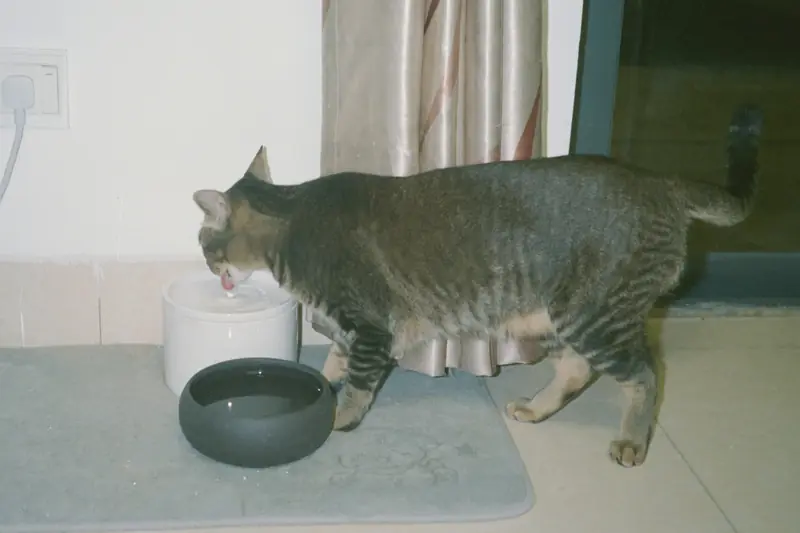
The second pillar asks you to provide multiple, separated key resources: food, water, toileting, scratching, play and resting. The guidelines say food and water should be separated from each other, and that every cat should have its own feeding station. They also say toileting areas should always be located away from food and water dishes (AAFP/ISFM).
In practice, that means spreading things out. Put the water bowl in a different spot from the food bowl. Keep the litter box in another room again. Give each cat its own bowl in its own space, and place scratchers and beds in separate spots.
This is the same logic as the ASPCA rule of one litter box per cat plus one extra, kept in quiet places away from food bowls (ASPCA). Our litter box setup guide goes into the details, and our water fountain picks help if you want to add a second water station.
Play that copies hunting
The third pillar is play and predatory behavior. The guidelines recommend prey-like toys, such as feathers or fur, and a rod or wand so the cat can "catch" the toy. They say to rotate toys to prevent boredom, and to avoid using hands and feet in play (AAFP/ISFM).
Think of a play session as a short hunt. Move the toy like prey, let your cat chase it and let it catch the toy at the end. Then put the toy away. A toy that stays out all the time stops being new, which is why the guidelines advise rotation.
Use toys, not hands. A wand keeps your fingers out of the game and gives your cat something to catch. Our picks for the best interactive cat toys compare wand, electronic and puzzle toys by motion, materials and upkeep.
Puzzle and timed feeders
Meals are also part of the hunt. The guidelines say puzzle feeders and timed feeders promote small, frequent meals, and that scattering or hiding food also helps (AAFP/ISFM).
Feeding matters for weight, too. The Association for Pet Obesity Prevention's 2022 survey found that 61% of cats evaluated by US veterinary professionals were overweight or obese (APOP 2022).
APOP's number comes from a survey, so treat it as a sign of how common the problem is, not a measure of your cat. A puzzle feeder or a timed feeder is one tool, and your vet decides how much food your cat should get. Our guide to the best automatic cat feeders covers portion control, power backup and microchip access for homes with more than one cat.
Vertical space and window views
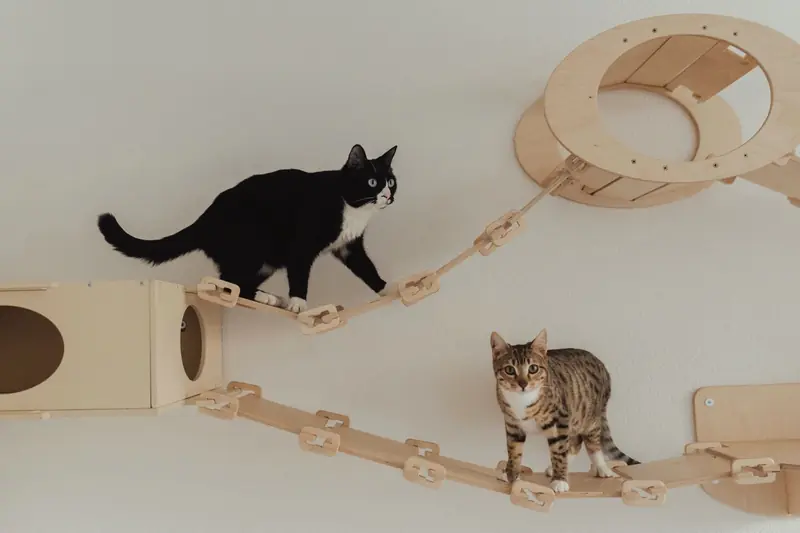
The guidelines say elevated areas increase vertical space, and that indoor resting areas should offer a view outdoors. They also say perches should be wide and long enough for a full stretch, and that sisal-covered surfaces work as scratching areas (AAFP/ISFM).
A cat tree near a window covers several of those at once: height, a perch with a view and a sisal surface. If a tree does not fit your space, a wall shelf or a window perch can give the same elevated view. Check the perch size against your cat, since a perch that is too small does not meet the "full stretch" idea.
Our cat tree picks list height, perch size and sisal posts in the spec table, and our guide on why cats scratch explains how to place a scratcher.
Scent and predictable routines
The last two pillars are about people and smell. The guidelines call for positive, consistent, predictable human-cat interaction, and for respect for the cat's sense of smell (AAFP/ISFM).
For routines, the idea is simple: be consistent. Feed, play and clean on a pattern your cat can count on, and treat your cat in ways it can predict. For scent, it helps to know what other sources say. ASPCA says scented cleaners can cause aversion (ASPCA), so choose unscented products for the litter box. AAFP advises lining a carrier with soft, familiar bedding that smells like you (AAFP).
Here is a short home checklist that pulls the five pillars together:
- A safe place for each cat, with more than one way in.
- Food, water, litter, scratching and rest kept apart.
- A wand or prey-like toy, and a rotation of toys.
- A puzzle or timed feeder, with your vet's advice on portions.
- A perch with a window view, and a sisal scratcher.
- A routine your cat can predict, and unscented cleaning products.
Start with the gap that is easiest to fill, and add one change at a time.
Gear that helps
-

Best Interactive Cat Toys and Puzzle Feeders
Prey-like wand toys and puzzle feeders cover the play pillar.
-
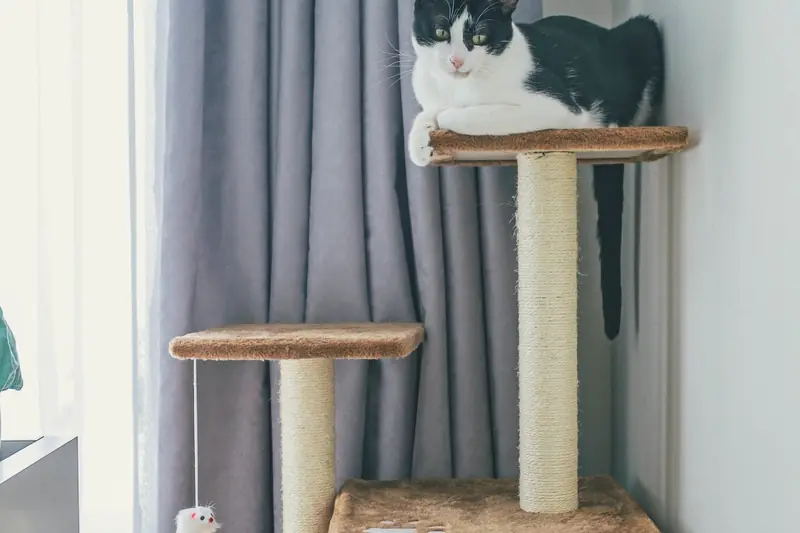
Best Cat Trees
Height, perches and a window spot cover vertical space and views.
-
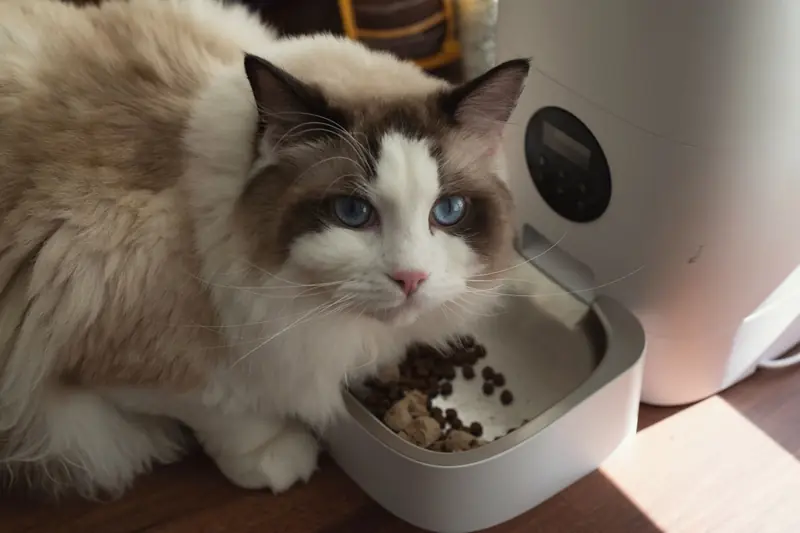
Best Automatic Cat Feeders
Timed feeders support small, frequent meals and separate feeding stations.
FAQ
What are the five pillars of a healthy cat environment?
A safe place; multiple, separated key resources; play and predatory behavior; positive, consistent, predictable human-cat interaction; and respect for the cat's sense of smell (AAFP/ISFM).
How many safe places does a cat need?
At least as many single-cat safe places as there are cats (AAFP/ISFM).
Should I play with my hands?
No. The guidelines say to avoid using hands and feet in play (AAFP/ISFM).
Related
-
Buying guide
Best Interactive Cat Toys and Puzzle Feeders
Wand, electronic and puzzle toys compared on motion, parts and upkeep.
-
-
-

-
-

Guide
Why Cats Scratch, and How to Save Your Sofa
Four reasons cats scratch, scratcher choice and placement, and why vets oppose declawing.
Get the Cat-Ready Home Checklist
A printable checklist built on AAFP, ASPCA, Cornell and FDA guidance, from how many litter boxes you need to which flowers to keep out. Free, and sized for the fridge door.