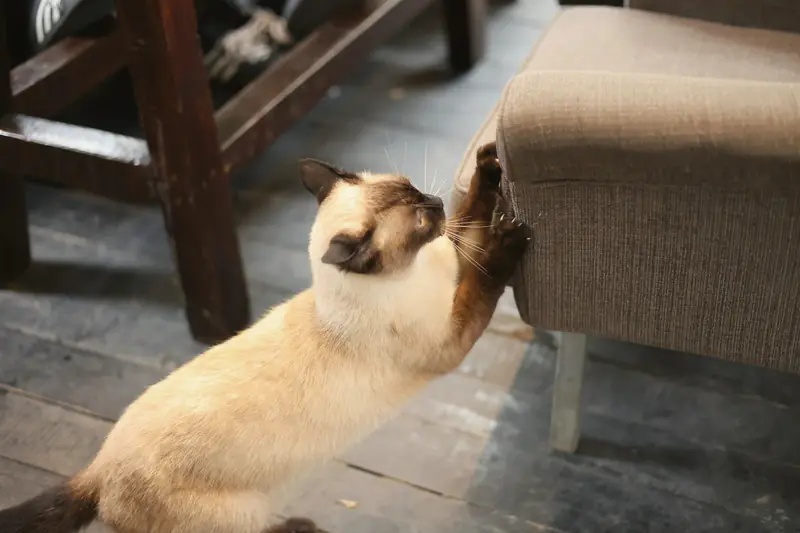
Why Cats Scratch, and How to Save Your Sofa
Four reasons cats scratch, scratcher choice and placement, and why vets oppose declawing.
Quick answer
Cats scratch to keep their claws in shape, stretch, remove the worn outer claw layer and leave scent marks; stress and anxiety can increase it (FelineVMA). To protect furniture, give your cat a scratcher in the right material and direction, place it near where your cat sleeps, and reward its use. Never punish. AAFP strongly opposes elective declawing.
Jump to section
Four reasons cats scratch
Scratching is not bad behavior. The Feline Veterinary Medical Association lists four reasons: cats scratch to keep the claw motion they use in hunting and climbing, to stretch, to remove the worn outer layer of the claw, and to leave scent marks. Stress and anxiety can increase scratching (FelineVMA).
AAFP agrees that scratching is a normal feline behavior, both inherited and learned (AAFP). That changes the goal. You will not stop a cat from scratching, and you should not try. Your job is to give the scratching somewhere to go.
| Reason | What it means for you |
|---|---|
| Claw motion for hunting and climbing | Offer a surface the claws can grip |
| Stretching | Choose a scratcher tall or long enough for a stretch |
| Removing the worn outer claw layer | Give it a scratcher so it has a place to do this |
| Scent marking | Put a scratcher in a spot your cat uses |
| Stress or anxiety | Scratching may increase; look at what has changed in the home |
Each reason points to something you can do. The hunting-and-climbing motion and the stretch call for a scratcher that is sturdy and tall enough to lean into. The worn outer claw layer and the scent marks explain why a cat returns to the same spot again and again: it is doing a job, not being spiteful. Understanding that makes it easier to stay calm, reward the right choices and stop treating the sofa as a battle.
If your cat suddenly scratches far more than usual, think about what has changed. Stress and anxiety can increase scratching, so a new pet, a move or a change in routine may be part of the story. Ask your vet if you are worried.
Choosing a scratcher: material and direction
Cats differ, so the best scratcher is the one yours uses. The Feline Veterinary Medical Association says scratchers can be vertical or horizontal, and suggests trying sisal rope, rough fabric, cardboard and wood to learn what your cat prefers (FelineVMA).
That list gives you a shopping and testing plan, not a rule. Some cats like the rough pull of sisal rope, some prefer the give of cardboard and some choose wood or rough fabric. Because the source only says to try them, you will learn your cat's choice by offering a few.
Treat it as a small experiment. Set out two or three different scratchers, such as a vertical post wrapped in sisal rope and a flat cardboard pad. Watch which one your cat chooses over a week or two, and buy more of that type.
The AAFP/ISFM guidelines add that sisal-covered surfaces work as scratching areas, and that perches should be wide and long enough for a full stretch (AAFP/ISFM). That is useful when you shop: a scratcher your cat can stretch against fits both ideas.
Our picks for the best cat scratching posts compare height, orientation, surface material, base weight and whether the surface can be replaced. If you want scratching, climbing and rest in one piece of furniture, see our cat tree picks.
Placement that works
Where you put the scratcher matters as much as what it is. The Feline Veterinary Medical Association advises placing it near where your cat sleeps, because cats often scratch when they wake up, and beside any spot your cat is already scratching (FelineVMA).
Try this in order:
- Notice where your cat scratches now: the sofa arm, the carpet edge, the door frame.
- Put a scratcher right beside that spot.
- Put another near the place your cat sleeps.
- Leave the first scratcher in place, and add more only if your cat uses it.
Put the scratcher where your cat already spends time, close to the furniture you want to protect, rather than in a spare room.
Reward, don't punish
Make the scratcher the best option. The Feline Veterinary Medical Association says to reward use of the scratcher with treats, and, if your cat scratches elsewhere, to gently move it to the scratcher. It says never to punish, because punishment can raise anxiety, and anxiety can increase scratching (FelineVMA).
That advice is practical. The source says punishment can raise anxiety and scratching, so scolding can backfire. Rewards work in the other direction.
Keep treats near the scratcher so you can reward quickly. When you catch your cat scratching the sofa, pick it up gently and place it at the scratcher, then reward any use. Repeat as needed. Be patient, as habits take time to change, and keep rewarding every use of the scratcher so your cat keeps choosing it.
Nail trims and nail caps
Two tools can reduce damage while your cat learns. AAFP lists regular claw trimming as an alternative to declawing, along with temporary nail caps (AAFP). The Feline Veterinary Medical Association notes that temporary nail caps must be reapplied every 4 to 6 weeks (FelineVMA).
If you are new to trimming or capping, ask your vet or a groomer to show you how. Do not guess. Trims and caps buy you time. They do not replace a scratcher, which your cat still needs for stretching and scent marking.
A quick checklist for a cat that is scratching the furniture:
- Is there a scratcher beside the spot being scratched?
- Is there one near where your cat sleeps?
- Have you tried more than one material, such as sisal, cardboard, rough fabric or wood?
- Is it vertical, horizontal or both?
- Are you rewarding use rather than punishing the sofa scratching?
- Has something stressful changed at home?
AAFP's full list of alternatives is: scratching posts or pads, regular claw trimming, temporary nail caps, synthetic facial pheromones and environmental enrichment (AAFP). Our guide to indoor cat enrichment covers that last item.
What declawing actually is
Declawing is not a nail trim. It amputates the third phalanx, called P3, which is the last bone of each toe. AAFP "strongly opposes" elective declawing, in a 2017 statement that updates its 2015 and 2007 statements (AAFP; FelineVMA).
If scratching is a problem in your home, start with the steps above: the right scratcher, the right place, rewards, trims or caps, and enrichment. If you are struggling, talk to your vet about the alternatives AAFP lists.
Gear that helps
-
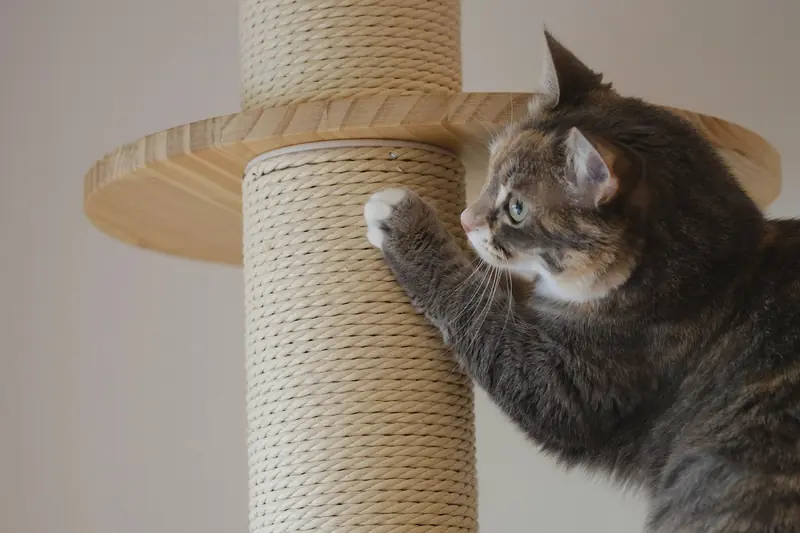
Best Cat Scratching Posts and Scratchers
Compare height, orientation, surface material and base weight to match your cat's style.
-
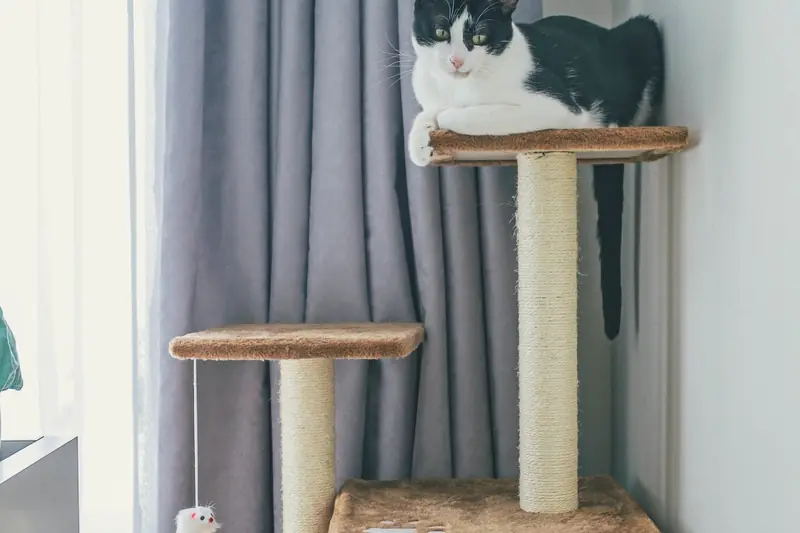
Best Cat Trees
A tree with sisal posts combines scratching, climbing and a place to rest.
FAQ
Where should I put a scratching post?
Near where your cat sleeps, since cats often scratch on waking, or next to a spot they already scratch (FelineVMA).
Should I punish a cat for scratching furniture?
No. Punishment can raise anxiety and scratching (FelineVMA). Reward use of the scratcher instead.
How often do nail caps need replacing?
Temporary nail caps must be reapplied every 4 to 6 weeks (FelineVMA).
Related
-
Buying guide
Best Cat Scratching Posts and Scratchers
Height, orientation, material and base weight, side by side.
-
-
-
Guide
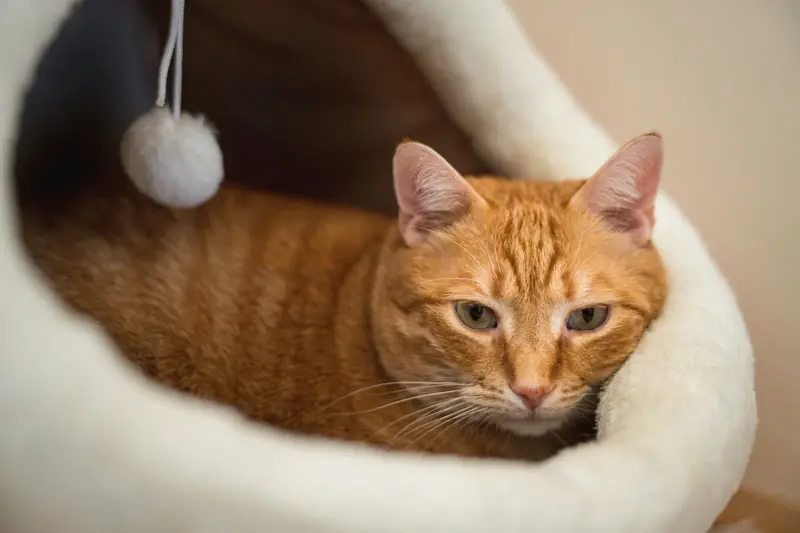
Indoor Cat Enrichment: The Five Pillars, Explained
The AAFP/ISFM five pillars turned into a home checklist.
-

Buying guide
Best Interactive Cat Toys and Puzzle Feeders
Wand, electronic and puzzle toys compared on motion, parts and upkeep.
Get the Cat-Ready Home Checklist
A printable checklist built on AAFP, ASPCA, Cornell and FDA guidance, from how many litter boxes you need to which flowers to keep out. Free, and sized for the fridge door.