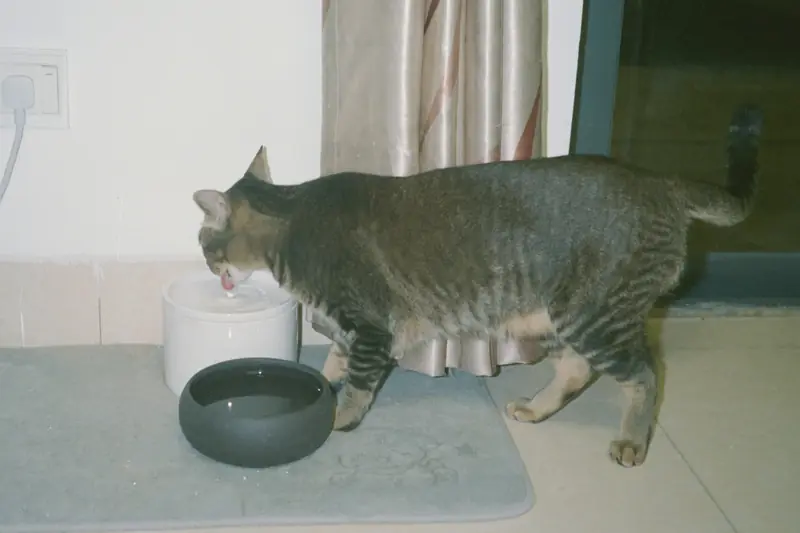
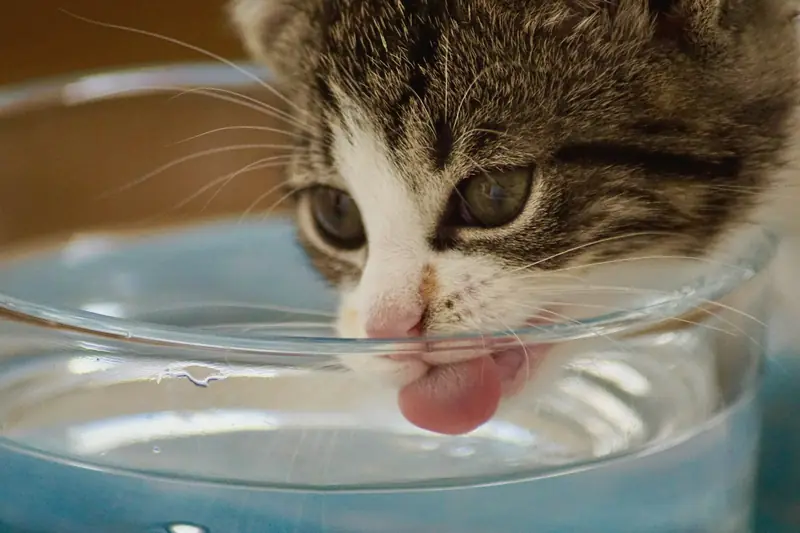
Cat Water Fountain vs Bowl: Which Helps Cats Drink More?
A bowl is cheap, silent and simple. A fountain keeps water moving and may appeal to some cats. Cornell says cats need about 4 ounces of water per 5 pounds of lean body weight per day (Cornell), so the real goal is to get enough water into your cat, whichever you choose.
Water fountain: the better choice if…
- Your cat shows interest in running water, such as a dripping tap.
- You want a large reservoir that needs refilling less often.
- You are willing to clean the parts and replace filters.
Water bowl: the better choice if…
- Your cat already drinks well from a bowl.
- You want the simplest thing to wash, with no power or filters.
- You want several water stations around the home at low cost (the multi-cat point Cornell raises).
Jump to section
At a glance
| Point | Water fountain | Water bowl |
|---|---|---|
| Hydration needs | About 4 oz per 5 lb (Cornell) | About 4 oz per 5 lb (Cornell) |
| Do they help? | May help some cats | Plain bowl; keep water fresh |
| Cleaning time | More parts to wash | One bowl to wash |
| Filter cost | Filters to replace | None |
| Noise and power | Pump hum; plug or battery | Silent; no power |
| Multi-cat conflicts | Prevent conflicts at water (Cornell) | Prevent conflicts at water (Cornell) |
Hydration needs
Cornell says cats need about 4 ounces of water per 5 pounds of lean body weight per day, about one cup for an average 10-lb cat (Cornell). Wet food can be up to 80% water, so cats that eat it may drink less. Our hydration guide explains how to work out your cat's number.
Do fountains help?
Cornell lists trying a fountain as one way to increase intake, and says it may help some cats, since preferences vary (Cornell). Nothing here says every cat prefers a fountain. Try one, and watch your cat's behavior.
Cleaning time
A bowl is one piece you can wash in the sink. A fountain has a pump, a cover, a bowl and often a filter. Check which parts are dishwasher safe in the listing, and clean on the maker's schedule. Fresh water matters either way.
Filter cost
A bowl has no filter. A fountain does, and you will buy replacements for as long as you use it. Check the filter price and how often the maker says to change it, then compare models on our fountain picks.
Noise and power
A fountain has a pump, so it hums and needs a plug or batteries. Read the listing for any noise claim and remember it is a maker claim. A bowl needs neither.
Multi-cat conflicts
Cornell lists preventing conflicts between pets at the bowl as a way to help cats drink (Cornell). That points toward several water stations in a multi-cat home, in easy-to-reach places, whether they are bowls, fountains or a mix.
Which should you buy?
If your cat drinks well from a bowl, keep it fresh and add a second water station. We have no separate picks page for bowls, so the buying guide linked here covers fountains only. If your cat seems drawn to moving water, a water fountain is worth a try. For the numbers, see how much water a cat should drink.
Alternatives
Feed more moisture through wet food, which Cornell says can be up to 80% water (Cornell). For timed meals, see our automatic feeder picks.
FAQ
Do cats drink more from a fountain?
They may. Cornell says a fountain may help some cats and that preferences vary (Cornell Feline Health Center).
How much water should my cat drink?
About 4 ounces per 5 pounds of lean body weight per day (Cornell Feline Health Center).
What if my cat drinks too little?
Cornell lists signs of dehydration, including lethargy, weakness, poor appetite and dry gums (Cornell Feline Health Center). Call your vet if you see them.
Related
-
-
-
Guide
How Much Water Should a Cat Drink? (Vet-Backed Numbers)
The Cornell daily water number, signs of dehydration and ways to help a cat drink.
-
Buying guide
Best Litter Boxes (Large, Low-Entry and High-Sided)
Size, side height, entry height and material for every cat.
-
Guide
Indoor Cat Enrichment: The Five Pillars, Explained
The AAFP/ISFM five pillars turned into a home checklist.
Get the Cat-Ready Home Checklist
A printable checklist built on AAFP, ASPCA, Cornell and FDA guidance, from how many litter boxes you need to which flowers to keep out. Free, and sized for the fridge door.