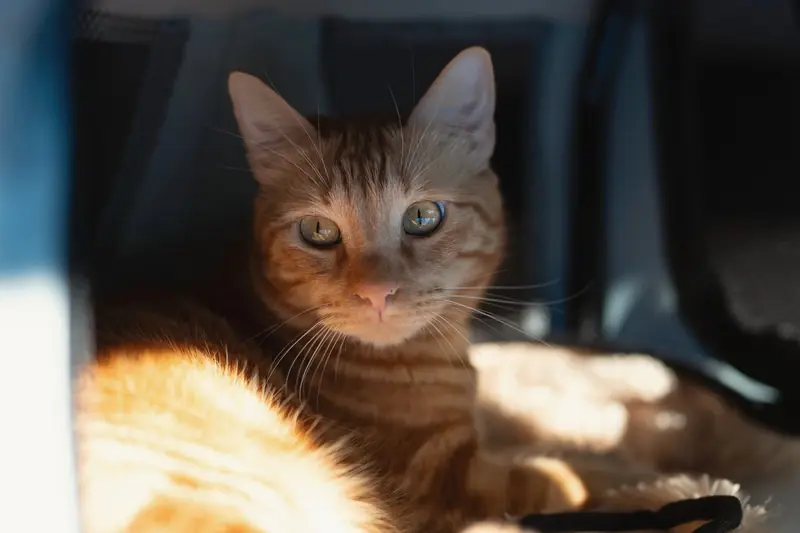
How to Get a Cat in a Carrier (and Make Vet Trips Calmer)
AAFP advice for carrier training, fast loading and safer car trips.
Quick answer
Use a sturdy carrier with both top and front entrances, and ideally a removable top half. Leave it out in a room your cat uses, lined with soft bedding that smells like you, and put treats, catnip or toys inside so your cat goes in on its own (AAFP). Adjustment can take days or weeks, so start well before the vet visit.
Jump to section
The right carrier: top and front openings
The best training plan starts with the right carrier. AAFP advises a sturdy carrier with both top and front entrances. A removable top half lets you guide your cat into the bottom half calmly (AAFP).
Each opening has a job. A front door suits a cat that will walk in on its own. A top opening lets you lift and lower a cat that will not. A removable lid helps at the clinic, because your vet can examine your cat in the bottom half without pulling it out of a space it knows.
When you shop, check the openings, the lid and the interior size in the spec table. Our guide to the best cat carriers compares those details, along with crash-test claims for car travel, so you can pick one that matches AAFP's advice.
Do not wait until the week of an appointment to look at carriers. Buying one early gives you time to follow the training steps below. And do not assume that the cheapest or the most compact model will suit your cat: check the interior size in the table against the size of your cat.
Here is a short checklist for the carrier itself:
- Sturdy, with no loose latches or cracks.
- A top entrance and a front entrance.
- A top half that comes off.
- Room for your cat to sit and turn around.
- One carrier for each cat.
Make the carrier part of the furniture
AAFP says to keep the carrier out in a room your cat uses, not in a basement or garage (AAFP). A carrier kept in a basement or garage only meets your cat on trip days. A carrier in the living room is part of the home, which is the idea behind the AAFP advice.
Then leave it alone. Let your cat find it, look it over and go in when it wants to. A spot in a room your cat already uses fits what AAFP describes, and it saves you from carrying the carrier around on the day of the visit.
Start early. Adjustment can take days or weeks, per AAFP, so do not begin the day before an appointment. If you have a vet visit coming, begin as soon as you book it, and keep the carrier in place after the visit, so it stays part of the room rather than a sign of the next trip.
Treats, bedding and scent
Make the inside of the carrier a pleasant place. AAFP advises lining it with soft, familiar bedding that smells like you (AAFP). A blanket you have slept under, or a small bed your cat already uses, does the job. If you need ideas, our cat bed picks include washable options, which makes it easy to keep the bedding fresh.
Put treats, catnip or toys inside so your cat goes in on its own. AAFP says not to coax (AAFP). Let your cat decide when to go in, and keep the first visits low-key.
AAFP also notes that a synthetic feline pheromone spray or wipe used inside the carrier may ease anxiety (AAFP). Ask your vet if you are unsure which product to use.
If your cat ignores the treats at first, check the basics: is the carrier in a room your cat uses, and does the bedding smell like you? AAFP says adjustment can take days or weeks (AAFP), so patience is part of the plan. Do not push your cat in to speed things up.
Here is a four-step routine you can follow:
- Open and visible: put the carrier in a room your cat uses, with the door open.
- Soft and familiar: line it with bedding that smells like you.
- Rewarding: drop treats, catnip or a toy inside, and let your cat go in without coaxing.
- Repeat: keep this up over days or weeks until your cat walks in without fuss.
When you need to load a cat fast
Sometimes there is no time for training. AAFP gives a plan for a fast load: use a small room with few hiding spots, move slowly, never chase your cat, and lift and lower it in through a top opening. A towel helps (AAFP).
Think about it in order:
- Close the door to a small room, such as a bathroom, so there is nowhere to hide.
- Set the carrier up with the top opening easy to reach.
- Move slowly, and do not chase.
- Lift your cat and lower it in through the top, using a towel if it helps.
- Close the lid and the door.
AAFP recommends a carrier with a top opening (AAFP), because you can lower a cat in from above. If your carrier has only a front door, read the maker's manual and ask your vet's office for advice, and consider adding a carrier with a top opening before your next visit.
In the car
A calm trip starts before you leave the house. AAFP says to cover the carrier with a towel and carry it with both arms, with one cat per carrier (AAFP).
Here is a checklist for carrier day:
- The carrier is covered with a towel.
- You carry it with both arms.
- One cat per carrier.
- It rides on the floor behind the driver or passenger seat.
- It is seat-belted only if it has been crash-tested.
- No cat roams loose in the car.
If you want a carrier that carries a crash-test claim, check the crash-test column in our carrier picks and read who made the claim. A maker's claim and an independent certification are not the same thing.
Coming home to other cats
The trip is not over when you walk through the door. In a home with other cats, AAFP says to leave the returning cat in the carrier for a few minutes and watch how the others react. If there is hissing, separate her. Swapping bedding helps restore familiar scents (AAFP).
The point of the bedding swap is to restore familiar scents, as AAFP puts it. Watch how everyone behaves, and if the hissing continues, keep the cats apart and ask your vet for advice.
Keep notes for next time: what your cat liked, which bedding it chose and how the return home went. Over time, each trip should get easier if the carrier stays part of the furniture. For more ideas on making your home a good place for a cat, read our guide to indoor cat enrichment.
Gear that helps
-
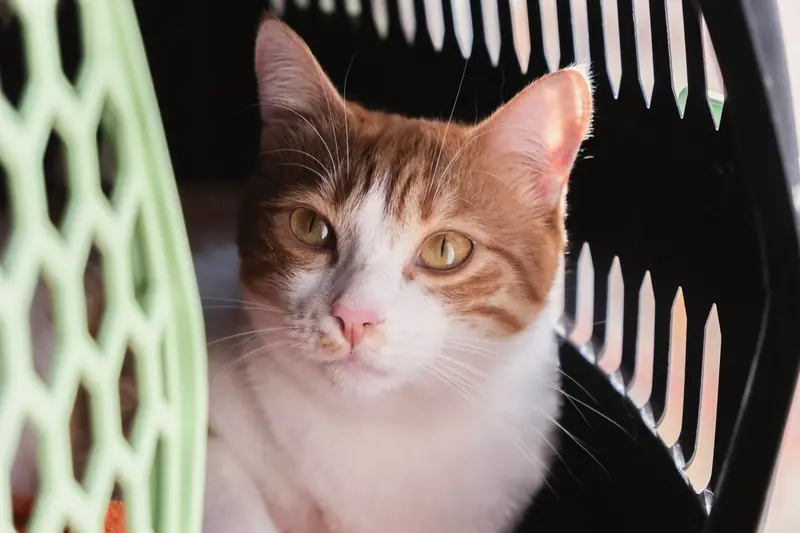
Best Cat Carriers
Compare openings, removable tops, interior size and crash-test claims.
-
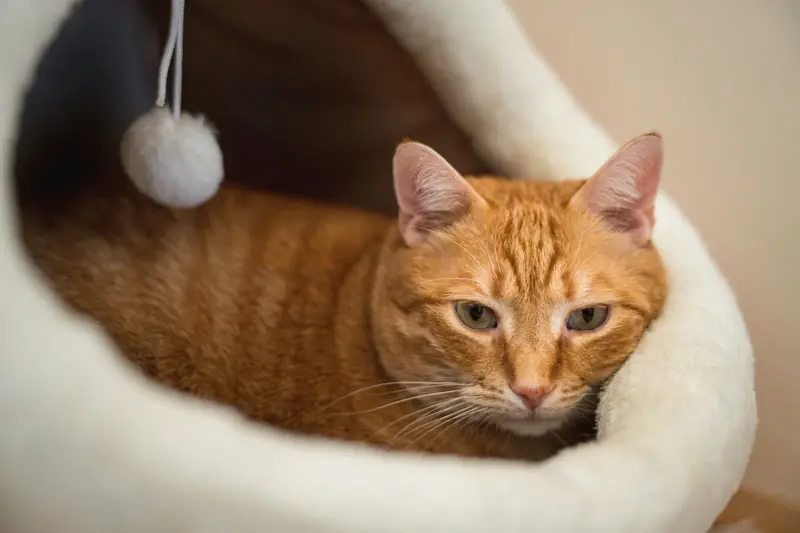
Best Cat Beds
A soft bed or blanket that smells like home makes the carrier more inviting.
FAQ
Should a carrier open from the top or the front?
Both, according to AAFP, ideally with a removable top half so your cat can be examined in the bottom half (AAFP).
How long does it take to get a cat used to a carrier?
Adjustment can take days or weeks, says AAFP (AAFP).
Can two cats share a carrier?
AAFP says one cat per carrier (AAFP).
Related
-
-
-
Guide
Indoor Cat Enrichment: The Five Pillars, Explained
The AAFP/ISFM five pillars turned into a home checklist.
-
Guide
Litter Box Setup: How Many, Where, and How Often to Clean
Box count, placement, litter depth and cleaning schedule from ASPCA and Cornell.
-

Buying guide
Best Interactive Cat Toys and Puzzle Feeders
Wand, electronic and puzzle toys compared on motion, parts and upkeep.
Get the Cat-Ready Home Checklist
A printable checklist built on AAFP, ASPCA, Cornell and FDA guidance, from how many litter boxes you need to which flowers to keep out. Free, and sized for the fridge door.